

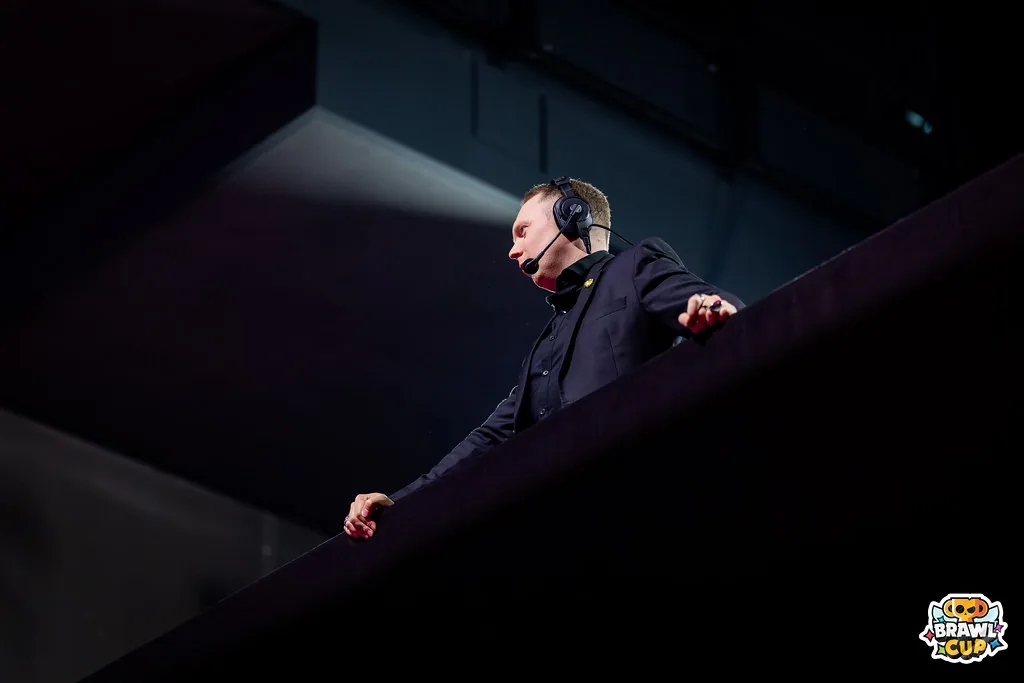
Before Ark was breaking down World Finals drafts, he was already deep in Brawl Stars.
He is an official Brawl Esports caster, a Twitch Partner, and a former global No. 1 player, but the more useful version of that resume is this: Ark has seen the game from inside ranked lobbies, community broadcasts, monthly finals, Brawl Cup stages, and the biggest World Finals weekends the scene has had.
That range matters because Brawl Stars can make everything look sudden. A last-second goal, a Mortis pop-off, or a surprise draft pick can feel obvious after the crowd reacts. Ark's job is to catch the part that happened before that: the prep, the trap, the matchup detail, the region-specific habit, or the tiny decision that made the highlight possible.
So we asked him about the difference between hype and genuinely high-level play, why NA is his favorite region to cast, what serious Ranked players still miss in draft, how newer ban and map-pick systems change the broadcast, and which stories Brawl Esports still needs to tell better.
This interview has been lightly edited for clarity and readability.
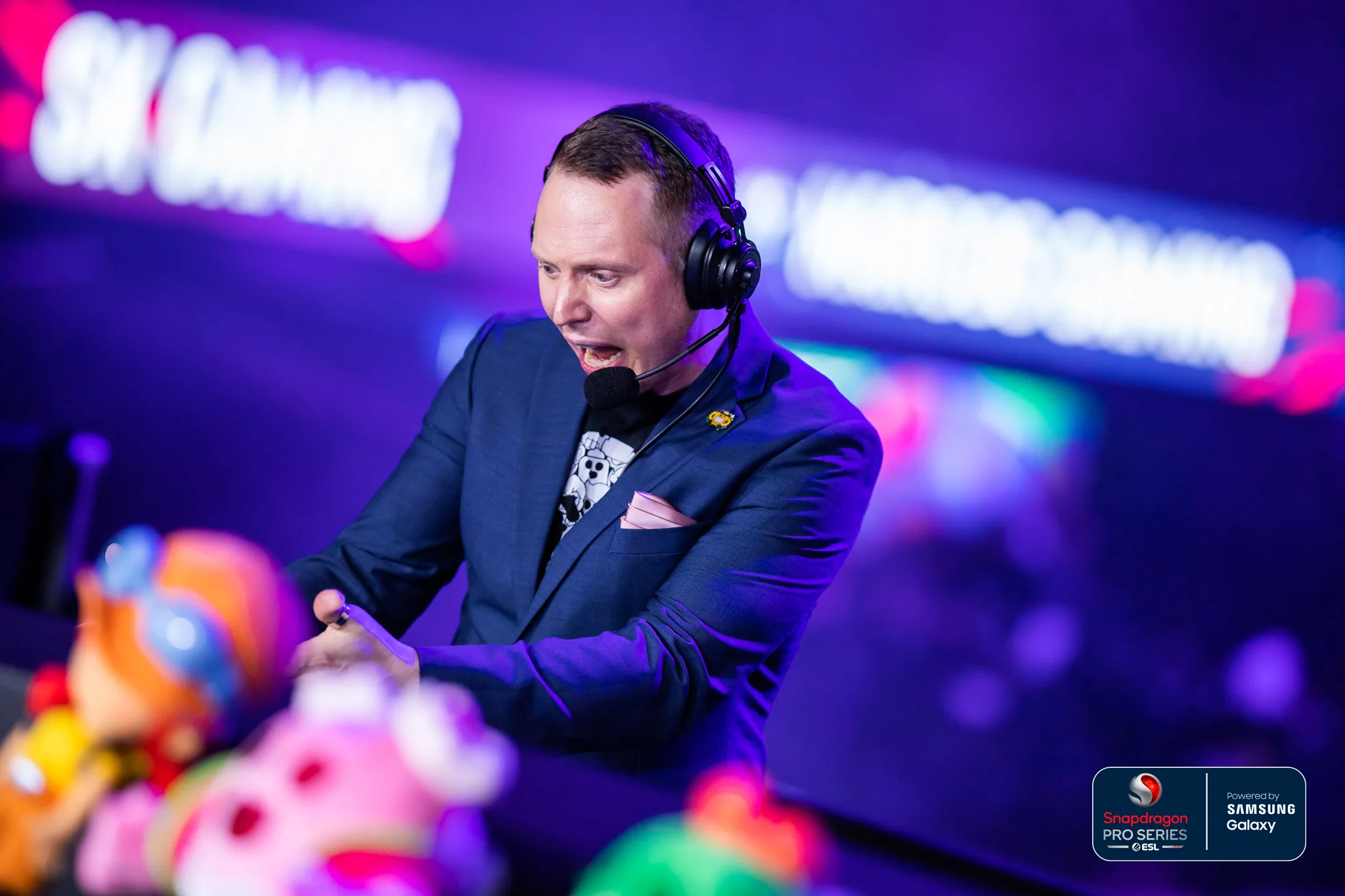
When you're casting a match, what's the difference between a play that is "hype" and a play that is genuinely high-level?
For the most part, plays that are genuinely high-level tend to get missed by the audience, or at least they cannot always fully appreciate them. A lot of the audience is somewhere between mid-hardcore and more casual. They have some understanding of the game, but they are not necessarily looking at it through a pro lens.
That creates a different challenge as a caster. You are trying to express both things at the same time: why something is high-level and why it matters emotionally. But you can end up explaining why a play is so good to the point that you explain away the hype.
It can be hype to you as a caster to see a genuinely high-level play, but that does not mean it will come across to the audience in the same way. It is very hard to translate what you are feeling internally about something.
That is why, for me, hype is something I feel I do very well, and it is something that speaks to the people who enjoy my casting. You do not always have to go into detail. Detail is good for post-game analysis and replays, where you can talk through things more carefully. But in the moment, I feel like the audience wants to be taken on that journey and feel what you are feeling, rather than have it explained like a novel.
I always gravitate more toward that side.
Which region currently has the most interesting playstyle, not necessarily the strongest, but the most fun to analyze?
I do not want this to be taken the wrong way, but personally I would say NA.
NA has so much potential, but it has not really looked or felt the same since 2023. There were some cool moments last year and some unexpected things, but I really want to see NA put itself back on the map and get back to that grand-finals-on-the-world-stage kind of prowess.
NA against itself looks so technical, so aggressive, and so enjoyable to watch. That is why I recently tweeted that it was my favorite region to cast, and I got a load of grief from EMEA for that.
It genuinely is my favorite region to cast. I do not really know what goes wrong for NA when it comes to the world stage, whether it is just being out-skilled. That is probably where most of it comes from. But I still feel like they have a very strong playstyle, and against a lot of other regions they absolutely stand a fighting chance. On a good day, I think they can crack East Asia.
South America makes up for a lot of its technique with charisma on the player cams and the overall team vibe. But North America has some super cool people too, some really down-to-earth players, and they really do want it.
It is only when they get to LAN events that they realize they are slightly behind. If we had more LAN opportunities, I think we could see them flourish and be tested more.
What's the most misunderstood part of drafting in Brawl Stars?
It might sound obvious, but I would say drafting against what you see.
That sounds simple, but I spot it a lot in Esports. Teams will just keep picking comfort picks. Comfort pick this, comfort pick that. Or your opposition does not ban something really strong, and because it is strong, you assume they made a mistake.
But if they are a really good team, you have to think deeper than that.
I remember it was either Humble or FUT not banning Bull in a monthly final this year. It has been a while, so I do not remember the exact match, but I distinctly remember thinking: this team knows better. They do not make these mistakes in draft.
So in that real-time scenario, you have to ask: why are they not banning this troublesome brawler? Why are they leaving it wide open?
The truth is, they may be laying a trap. They have scrimmed enough to know there is a comp they can use that can deal with it, and they are looking to see whether you walk into that trap. If you do not, they may final-pick it themselves because they already have a plan for it.
So the two biggest things are playing against the brawlers you actually see and being aware that you might be getting led into a trap.
If you were building a draft assistant for serious Ranked players, what would you want it to teach players beyond simply "pick this brawler"?
I want to see the reasons why a brawler works into something.
That could be icons, stats, or something that points out where the counter actually lies. If you are looking at a Rico interaction, for example, there are situations where a brawler gets very strong into Rico, but Rico with the right gadget can still defend it. If Rico is running Multiball Launcher, that changes the conversation.
That goes beyond saying "this brawler counters this brawler," because gadgets and star powers can seriously change the outcome too.
That is what a lot of draft simulators miss. It is not always brawler-to-brawler. Loadout is often missing. I would want to see the preferred kit, but also have that dynamically change depending on the draft forming on the other side.
Gears matter too. Maps are specific, and gears can shape how a match plays out. Maybe some tools already do this. I am only starting to look into that world, so it would be interesting to compare notes and find what is still missing from the market.
The point is that it is not just "this brawler counters this." It is the educational side. It is the why.
It could also be interesting to have some kind of interaction layer where players can agree or disagree, or a community vote that gathers feedback after games. If the data says a comp should win, but users are saying, "actually, we beat it," maybe there are trends there that help everyone improve.
BSC 2026 added more strategic tools like map picks and refined ban systems. From a broadcast perspective, does that make the game easier or harder to explain?
It probably makes it a lot harder for viewers to follow, if I am honest.
That puts us to the test because it is down to us to welcome in people who are new to Brawl Stars and want to understand what is going on. As a caster, it is also more challenging when I am looking at my data and seeing potentially ten unique brawlers banned.
At that point, you are looking at data that is more about what is banned than what is still relevant to discuss. As much as you might want to talk about how strong a particular brawler is on the map, you need to focus on what is still available and what has actually been picked.
You are often trying to predict what comes next, explain what you would be thinking as a professional, and then hopefully have that come to fruition. It is definitely more challenging because there is so much more discussion. There are so many more bans to talk through, and once all those bans happen, there are so few options left that you can end up wondering what there even is to pick.
I do think it is better for the game. Without doubt. It is shaping and changing draft very quickly, and I do not think people have realized how quickly things are developing.
For the UI, I think we do a fantastic job of displaying the information, but it can still be clunky. I would like to see draft take a more exciting form. League of Legends makes draft feel exciting. Fans get behind it. We see a little bit of that during World Finals when certain brawlers get a crowd reaction.
Since 2019, I have always said my perfect world scenario is augmented reality on the world stage. If El Primo gets picked, let El Primo come down onto the stage with a flying elbow drop. Let the stage crack and shatter on the livestream. I want to see brawlers interact with the stage and come into the real world.
That would be expensive, of course. But that kind of thing would be so sick.
In a nutshell, though, it is becoming tougher for talent to guide the casual viewer through the stream. I am constantly trying to find ways in my personal preparation process to streamline that.
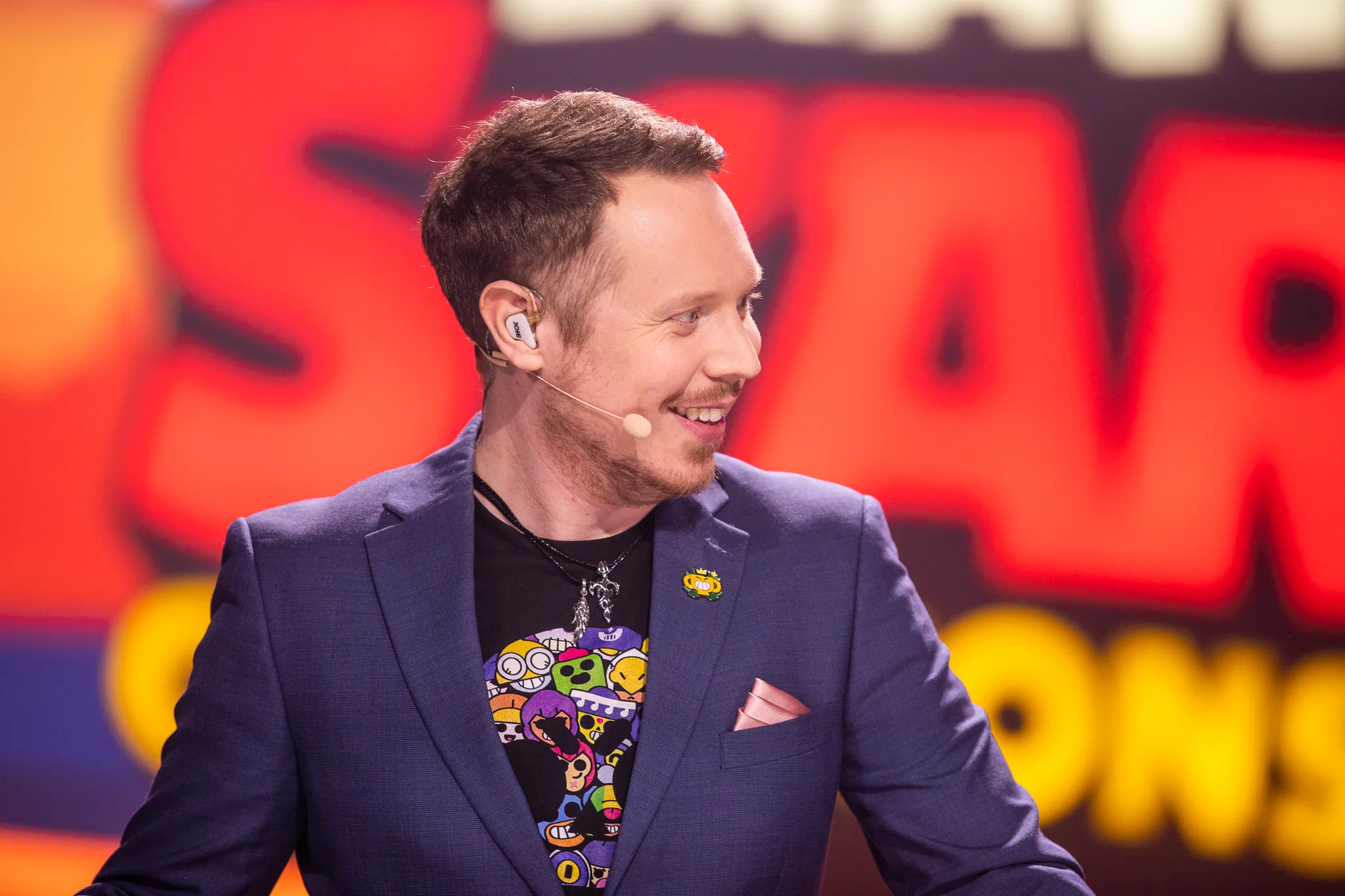
If you could delete one brawler from competitive for one month just to make broadcasts better, who would it be?
At the moment I would probably say Mortis or Kit.
Mortis is in such a strong place in the right hands, and obviously we have a lot of those right hands in BSC. It is different from ladder, where Mortis may have a more even win rate. In competitive, since the buffs, his kit has been elevated so much that it would be nice if he were banned out for a bit.
I actually looked back at some VODs recently, and that was something we did in my league, Brawl League Europe. We had a community ban. We asked every team in that month what brawler they would like to ban. I think we asked them to submit two blind choices. At the end, we had a poll, and it was tied between two brawlers, so we asked viewers on Twitter to decide.
I think there is room for that in BSC. I genuinely feel like a community ban would be the answer. Every brawler has an impact on draft, even if it is indirect. You can only ban so much, and if there are multiple oppressive brawlers in the meta, they are not all going to disappear.
So beyond the globally banned brawler system introduced this year, I think there is scope for something voted on by the teams in a bracket and banned for an entire broadcast.
For me, right now, it is Mortis. That could change because the meta is always evolving.
The problem is that Mortis also makes really exciting plays. If I watch a match and someone goes crazy with Mortis and makes a clutch play in Bounty, I want to see that. I do not want it banned out. So now I am already self-doubting.
Maybe Naja, because we have not seen her much yet. If she is already getting banned and her attack is not nearly as exciting as Mortis, maybe Naja is the answer too. We will see as time goes on.
What's something fans would be surprised to learn about preparing for a Brawl Stars broadcast?
I could write an essay on this question.
If people could come inside my world for a day or a week, or even a non-prep event week, I think it would blow their minds. There is a massive divide between what people think and what actually happens.
I imagine people watch these shows and think I just show up, make it up off the top of my head, and then jet off to the Bahamas for a margarita until the next event. I genuinely think that is how some people see it.
The truth is that so much goes into prep.
Going back to the beginning, I was always trying to reinvent my prep process and set an example for the next generation coming through. My first show was March 2020 in Katowice, Poland. It was the March monthly final for that season.
The game was so simple then. There were barely two star powers. Gadgets were either not a thing or only just becoming a thing. My cue card consisted of the star power names for every brawler. That was it. That was my prep, because it was a very different time. I had some facts about teams that had competed at the 2019 World Finals, but outside of that, it was star power names.
Now it is a minefield.
I am still working on tools and features that I hope to expand, especially using API data in my design work. If the API can stop me from manually inputting everything, I can automate parts of the process and spend that time on new areas of prep. That would let me enhance narrative and storytelling, which can get lost when you are buried in prep.
Every LAN event, I find myself repeating the same task: going through Liquipedia, counting historic wins, World Finals appearances, monthly final wins, and building player portfolios. Time keeps moving, players keep winning, and if you want that database to stay current, you need to build it properly and maintain it.
In a perfect world, qualifying results and monthly final results would come through the API. Right now, they end up in my Google Sheets manually, alongside roster changes for every show. I format everything so it can be printed as A5.
Going into a World Finals, Brawl Cup, or LCQ, I used to attend with cue cards printed on adhesive labels. Every event has different cue card branding, so you get the cardboard cue cards on site. Very early in my career, I realized I did not want to write everything by hand fresh at every event.
On site, you are already under stress. You have media commitments, rehearsals, production changes, things breaking, and time disappearing quickly. You cannot rely on writing everything when you arrive.
Recently, I have moved more toward being paper-free. There is a certain confidence that comes from not holding a cue card in front of you. I try to do more prep in the weeks leading up to an event, right up until the day before flying. Then, when I arrive, I have an agreement with myself: you are prepped now. You are not doing last-second revision for an exam.
If you do not know what you are supposed to know by then, you did not give yourself enough time. You learn from that and do better next time.
I am full-time, so there is always something to do. There is not a single official show where I just show up and, as we say in the UK, blag it. I have worked on some productions where you have no choice because they are all over the place, especially more amateur or community league things. Sometimes you have to carry it and follow your gut rather than the direction. But for official broadcasts, the prep is constant.
If you had to cast one set with no prep, no notes, and no co-caster, what would be your nightmare matchup?
Mainland China generally is a bit of a nightmare.
It is a complicated issue. I do not pretend to understand the full ins and outs or the production politics behind the scenes with that joint venture. But I do feel like we had it in a much better place in 2021.
Back then, having Mainland China monthly finals on the English broadcast was the best way for us to follow the storyline and narrative. There is obviously some agreement between Supercell and Tencent. I have no idea what it is. I can only speculate, and it is above my pay grade, so it is not really for me to comment on or judge.
But I miss when I knew every player from every squad there, just like with every other region we cover. Now we get to LAN events and I am calling contacts asking, "can you fill me in? What has been going on?"
Until this year, there has not always been much need to know beyond what Toxic Lotus has been doing. But they are still playing someone, and you want to know who is rivaling them.
It is very hard to follow as a region. I have done Mainland China casts over the years, usually LCQ or World Finals qualifier related, and going into those streams with such limited information is very hard. It is hard to find the lead-up to the event, the qualifier format, the meta, and even what balance build they are on.
For a long time, the build could be months behind. Even if I hear it is now up to date with the rest of the world, I do not fully trust it because it was behind for so long. Once it gets back on track, does it stay there? Does it drift out of date again? I do not know.
There is so much I do not understand with Mainland China, and there is not always a clear person to ask. We just wait for LANs to come around.
The frustrating part is that there is nothing worse as a caster than saying to the audience, "we do not really know what to expect from this team." I found myself saying that a lot at Brawl Cup. I do not want to say that, because viewers are looking to me to educate them and help them catch up.
In a region without YouTube and with its own systems, if something is not on BiliBili, it is basically gone. Then I am down to voice chats with people in the region to understand their opinion. It is not ideal.
Mainland China, on the whole, is the nightmare matchup I hope changes. 2021 felt like a better time, and I can only assume budgets are the main reason we do not do that anymore.
What do you think Brawl Stars Esports does better than other mobile Esports?
But I think we have a very good, engaging event site. It could be better, but even having an event site is already more than most games are willing to provide their communities.
I like that we have the Pro Pass in-game and that the Brawl Stars Esports tab is getting better. Maybe I am being critical to start, because I immediately want to talk about what we could improve.
One thing we do very well is getting the community involved. When you go to an event now, people forget that we are filling auditoriums for just Brawl Stars. So many events over the years were DreamHacks, where crowds could come and go between different games. You could argue the crowd was there because the event had more value overall.
Brawl Cup was different. That was insane. Our community is top-tier, and I think it is only going to grow. It is kind of scary for me, having been here from almost the beginning, to see how the crowds have changed over time.
There are not actually many Brawl-only live events when you look back. Now we are not just doing Brawl-only events; we are thriving off them. Brawl Cup was rowdy and exciting. People were SO passionate! I want more of that.
I love Rocket League in that regard. It feels like going to watch a football match. I want that for Brawl. Sao Paulo for LCQ last year was unreal. If we can do what Sao Paulo does anywhere, then we are in a fantastic spot.
I also think we offer a really exciting format. This year, I do not see nearly as many people complaining about the format as in previous years. We do that really well.
Hopefully, talent as well. I would like to put that out there. I hope we do a good job of explaining the game and getting excited about what we see, and that people are not just waiting for us to leave the match so they can get to their favorite pairing.
One thing we could maybe do is more consistent pairings, like other games. Some casters really gel well together, but there is also a nice balance in rotating.
Finally, I think production is really professional. That is not always the case across Esports, especially when budgets differ. If you compare to League of Legends, that is another world of budget. But what we do with what we have is really impressive.
Do you think Brawl's fast pace is its biggest strength as an esport, or its biggest challenge?
In terms of casting, it is probably its biggest strength because it allows flexibility.
There is play-by-play, where you are going through what you see in front of you and talking at speed, and there is colour casting, where you add explanation as to why something is happening. In Brawl, you can be play-by-play, colour, or pretty much both. Really, you should be doing both at the same time, and you have to be comfortable doing both.
That is why Brawl Esports has such a competent talent team. We have to push the envelope. In other Esports, you can find your niche, stick there, and survive. You can say, "colour casting is not my job," and sit back. In Brawl Stars, that is not the case. You have to be on your toes and learn both. You do not necessarily have to master both, but you must be able to carry yourself in both.
Where it becomes a challenge is the product itself.
Take analyst desks. We tried one at Brawl Cup, but I did not feel like it was incorporated into the product enough or given the time needed for standout breakdowns. If you are going to have a dedicated analyst role, you need time to break down clips properly.
The streams are fast-paced partly for retention reasons. When there is downtime, or anything that feels like downtime, it can lose viewership. Brawl Stars is aimed heavily at a younger market, and attention spans are not always forgiving.
Because the game is known for short, fast matches, the broadcast constantly moves to the next game. That is part of the appeal. It is the USP. But it means we do not get many chances to deep-dive into things because there is a constant production drive to move quickly. That is Supercell's goal, and my job is to help make that reality. This is just my opinion.
The downside is that you can never really stop.
In games like Valorant or CS:GO, there are moments of creeping around corners, moments where you know where each player is, and tension builds. That is what Brawl Esports lacks. There are not many down moments. It is always one gear, and that gear is go.
There is not much chance to bring the car into a lower gear and create tension. Maybe Knockout 1v1s can do it, but even those can become anticlimactic or short-lived.
For the most part, I would still say the pace is an advantage. But it is definitely both.
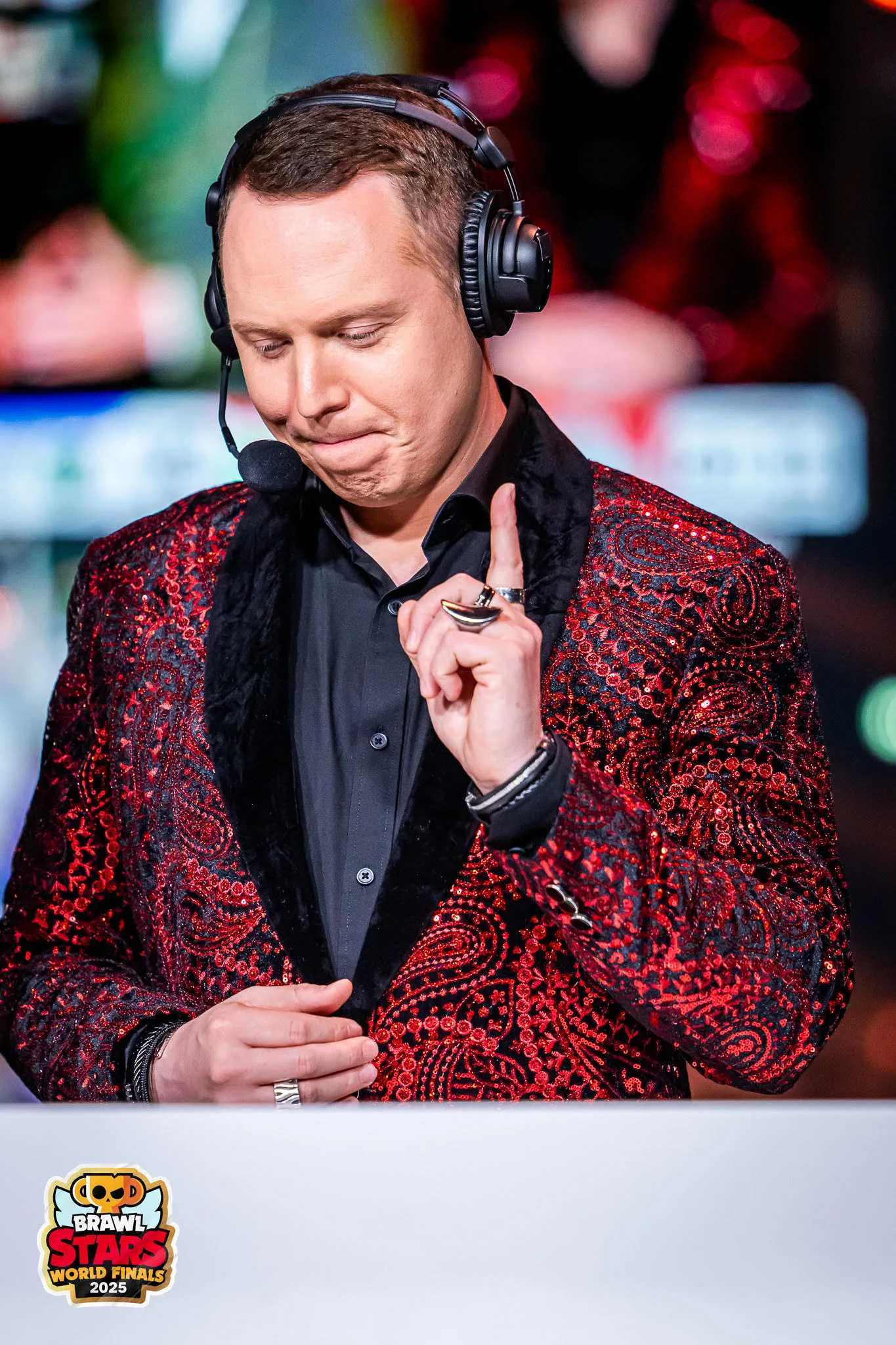
Which players or teams deserve more storytelling coverage than they currently get?
I feel bad for Sergeant.
Every year he seems to get a mountain of challenges, whether it is ping, teammates, format, or something else. I am careful on broadcasts not to overcommit too heavily, because it is a team game. But watching him play Berry in Hot Zone (at the recent Brawl Cup), all I could think was that he was doing everything.
He feels like one of those rare examples of a one-man band. If we had more storytelling narrative in that region, would that create more back and forth? Would other players say, "everyone talks about Sergeant, what about me?" Would that create more storylines, or would it just become boring because Sergeant is destroying his home region?
That is how I felt watching the Road to Brawl Cup stuff. Then, going into international events, it is hard to know whether they will be as good against other teams because they are so far ahead of their home region. Are they in their own little bubble, or will they trample major players on the world stage? It is hard to tell.
So I would say Sergeant. Mainland China is in a similar predicament, but knowing how good Sergeant is, he is absolute world class. I would love nothing more than to see him get to another region.
I do not know the full ins and outs of what that would take in his position. But if I could see him on a squad in EMEA, I would absolutely love that in Brawl Esports. That would be a fantastic storyline, and then we could give him the storytelling coverage he deserves.
For PL Prodigy readers trying to get better at drafting, what is the single biggest mindset shift they need to make?
I do not know if this is the mindset shift, but players need to realize that however long they have played the game, that alone does not make them good at draft.
There is this dilemma between the old guard of Brawl Stars, the players who were around before draft and grew up with it, and the new players coming in. You can have been there since the beginning of draft and still be a terrible drafter.
The new young players see draft differently. Up-and-coming rookies are dangerous. It happens every year. There are players I have never heard of, except maybe from Matcherinos, and as soon as they can compete in BSC, they come in and blow teams out of the water. Their lack of experience is often their biggest weakness, but mechanically and strategically, they can be scary.
Team Electros this year were a fantastic example. Coming into that first monthly final, I was thinking, how have I never heard of some of these guys before? I knew a couple of names from Matcherinos, but not enough to predict they would win a monthly final. The second I saw them play their quarterfinal, I was rooting for them because their mechanics were so plain to see.
For anyone trying to draft better, I would listen to the younger guys over the older guys in a lot of cases, despite the older guys growing up with draft. Their approach can be unmatched. Even older players who draft well are often getting chances to bounce ideas off younger players.
The other big thing is prep. If something throws you on the day, you probably did not do enough prep.
Data is data. If you have an analyst, that is amazing. But every serious team now knows their scrims are going onto a spreadsheet. That means there is every reason to keep things in the back pocket.
I am noticing this more and more in my data. There are sleeper picks and brawlers teams have no reason to scrim with because they know it is their best brawler. There is every reason Symantec will not scrim Frank, because he knows he can bring it out on basically an open map and still put up a fight.
New brawlers are similar. A lot of teams will not bother drafting or playing them in scrims, and a lot of the time they are banned anyway.
That is another issue with data: we do not have access to banned brawler data, so the reasons brawlers are not showing up sometimes is just because they are banned the whole time.
So the mindset is knowing the best bans for a map, but also knowing the best bans against the team you are facing. That is often forgotten. At the top level, global bans help a bit because you know what your opposition is dangerous with, or at least you should.
In normal Ranked, you do not always know who you are playing unless you are at that pro-rank level, so you have to think more around meta. But the same question still matters: is there a reason your opponent left something open?
Is it a mistake, or are they laying a trap because they have spent so long scrimming how to counter that obvious pick?
Try to expand your mindset around those questions. That is where better drafting starts.